Know What You're Looking At
Common Types of Foundation Cracks
Not every crack means the same thing. The shape, direction, and width of a crack tell us a lot about what is happening beneath your home and how urgently it needs attention.
Usually cosmetic
Hairline vertical cracks
Thin, straight cracks that run up and down are often caused by concrete shrinking as it cures. They are common and usually harmless, but worth watching for any change in width.
Watch closely
Diagonal cracks
Cracks that run at an angle often point to uneven settling, where one part of the foundation is sinking faster than another. They tend to widen at one end over time.
Get it inspected
Stair step cracks
Cracks that zigzag along the mortar joints of block or brick walls usually signal settlement or soil movement. They are a common sign the foundation is shifting.
Get it inspected
Horizontal cracks
A crack running sideways across a foundation wall usually means soil or water pressure is pushing against it. These are among the most serious cracks and should be looked at soon.
Watch closely
Slab and floor cracks
Cracks in a concrete slab or garage floor can be simple shrinkage, but cracks that are uneven, raised on one side, or growing can point to movement in the soil below.
Don't Ignore These
Warning Signs That Come With Foundation Cracks
A crack on its own doesn't always tell the whole story. When it shows up alongside any of these signs, it's a good idea to have it inspected.
- Cracks that keep growing. A crack that widens, lengthens, or returns after patching points to ongoing movement.
- Doors and windows that stick. Frames pulled out of square are often a sign the structure is shifting.
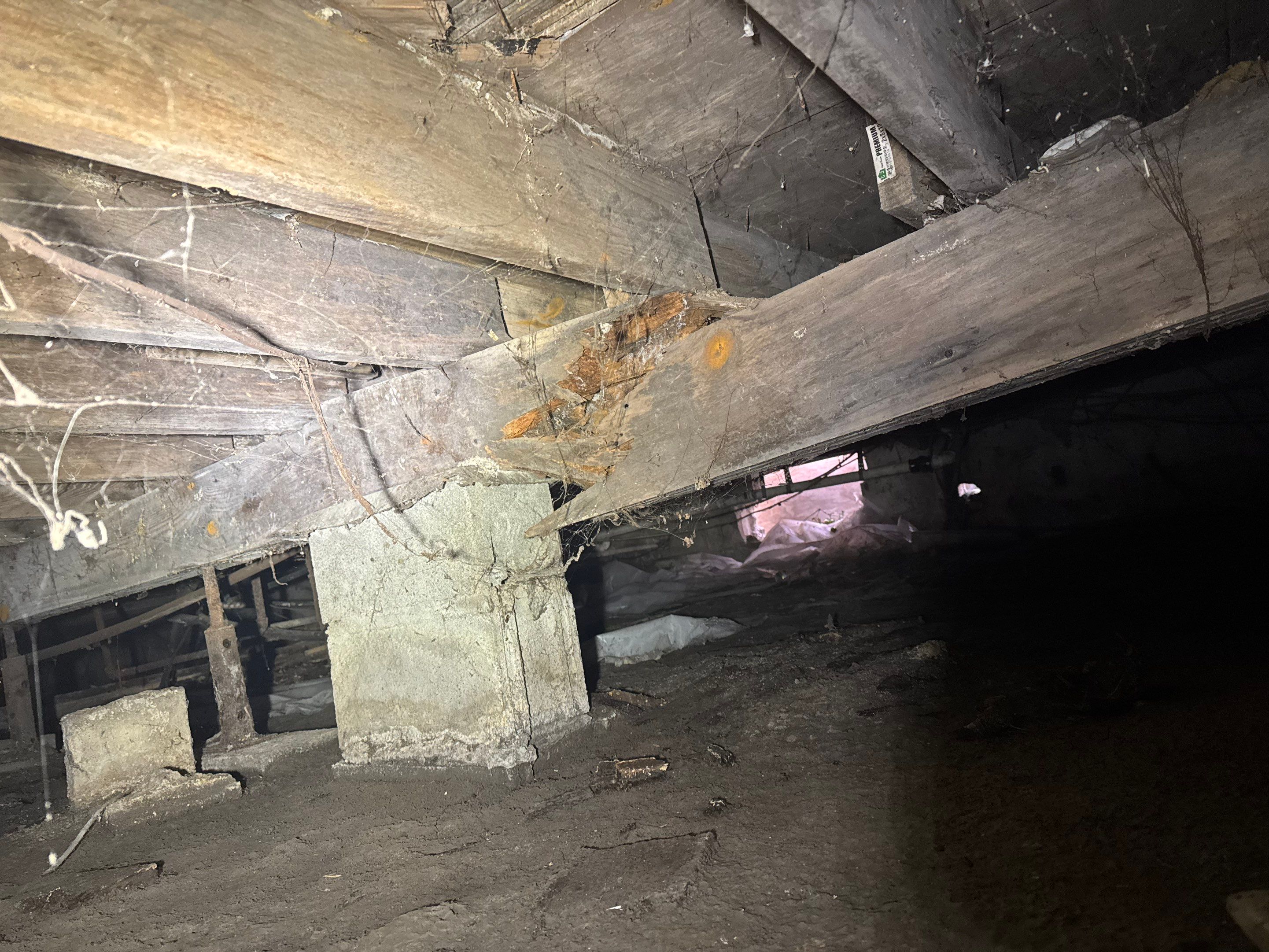
- Sloping or bouncy floors. Uneven floors often mean supports below are failing. Learn more about sagging floor repairs.
- Gaps around trim and frames. New gaps between walls, ceilings, and trim can follow foundation movement.
- Water or dampness. Cracks that let in water, or a damp crawl space, need attention before mold and rot set in. See our moisture control services.
- Cracks in exterior brick. Stair step cracking in brick veneer often mirrors movement in the foundation behind it.
Fix the Cause, Not Just the Crack
How We Repair Foundation Cracks
Filling a crack without understanding why it formed is how the same crack comes back a year later. We match the repair to the type of crack and the cause behind it.
Crack sealing and injection
Non-structural cracks can be sealed with an injected material that fills the crack from the inside, blocking water and preventing it from spreading.
Structural stabilization
When a crack comes from pressure or settlement, the wall or supports are reinforced so the foundation stops moving before the crack is repaired.
Water and drainage control
If water is driving the problem, we add crawl space waterproofing or drainage so pressure and moisture stop building against the foundation.
Support and floor repairs
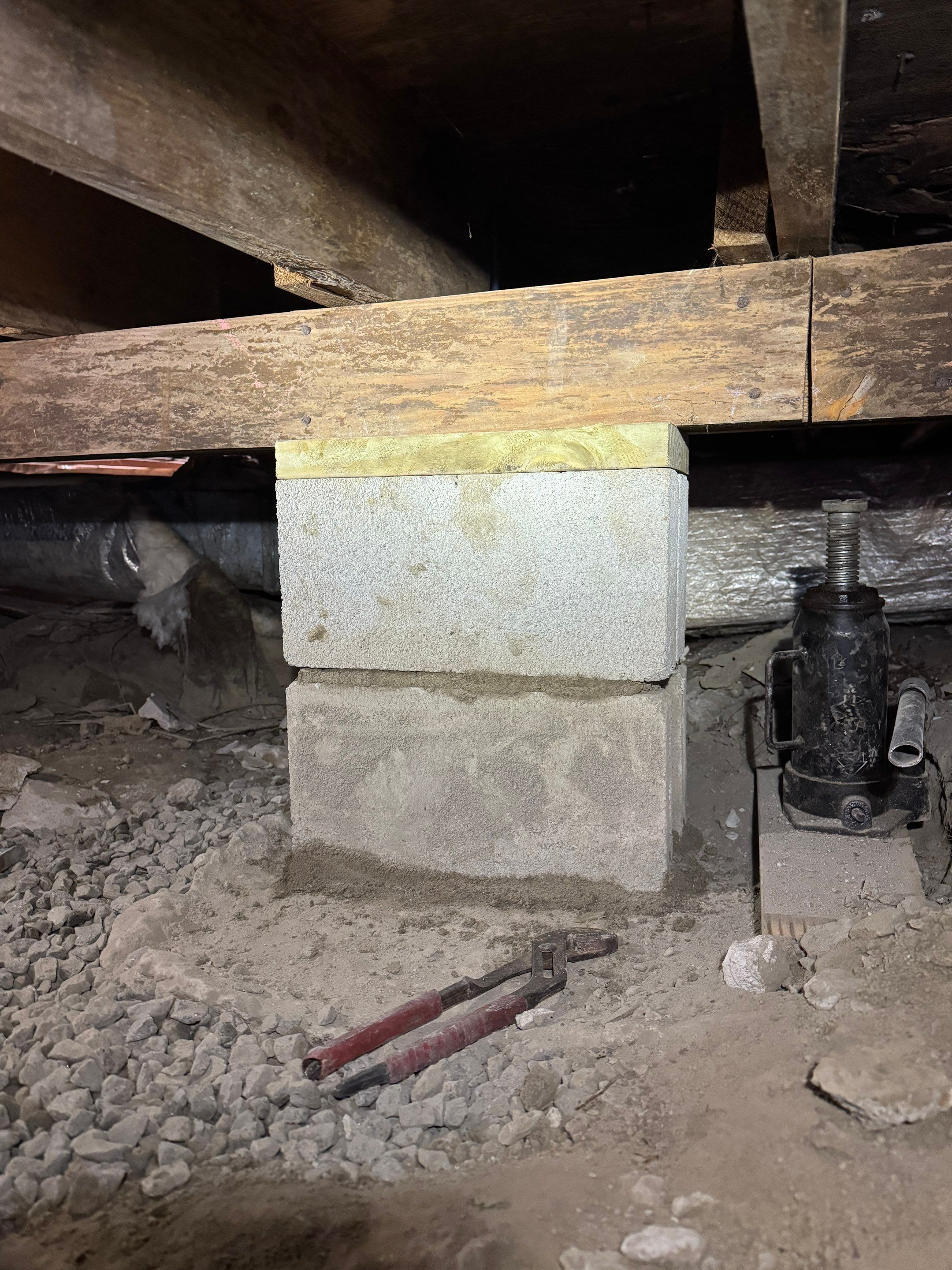
Where cracking has come from weakened supports underneath the home, we repair or replace them as part of our wider foundation repair services.
Clear Answers Before Any Work Begins
Our Foundation Crack Inspection Process
Every repair starts with a free inspection, so you know exactly what you're dealing with and what it will take to fix it.
-
Look outside and in
We check the exterior foundation, grading, and drainage, then inspect interior walls, floors, doors, and windows for related signs of movement.
-
Inspect the crawl space
We look beneath the home for moisture, damaged supports, and soil conditions that may be causing the cracking.
-
Assess every crack
We document the type, width, and location of each crack to tell cosmetic cracks apart from structural ones.
-
Walk you through the plan
You get a clear explanation of the cause, the repair we recommend, and a transparent price, with no pressure to commit.
Local Knowledge Matters
What Virginia Beach Homeowners Should Know About Foundation Cracks
Virginia Beach sits low on the coastal plain with a naturally high water table, so the ground under many homes stays damp long after a storm passes. Heavy rain, hurricane season, and nor'easters push even more water into the soil, and neighborhoods with a history of stormwater flooding, like Windsor Woods and Princess Anne Plaza, feel that pressure most. When the soil around a foundation is repeatedly soaked and dried out, it expands, shrinks, and shifts, and that movement is one of the most common reasons cracks appear.
The type of home matters too. Many established neighborhoods such as Kempsville, Thalia, and Great Neck have older houses built on crawl spaces with original wood supports, where years of humidity can weaken the structure and lead to cracking above. Newer homes on concrete slabs can still crack as the soil beneath them settles. Homes near the water in Sandbridge and along the bays face salt air, constant moisture, and sandy soil that can wash out from under footings.
Because these conditions start with water and soil, foundation crack repair in Virginia Beach works best when it addresses both. That is why we look at drainage, crawl space moisture, and supports, not just the crack itself. If your home has other signs of foundation trouble, see our full foundation repair in Virginia Beach page.